




Why do you sell what you sell today?
Chuck Lencheck asks dealers that question a lot. Most of the time, he says, the honest answer is some version of “that’s what we’ve always sold.”
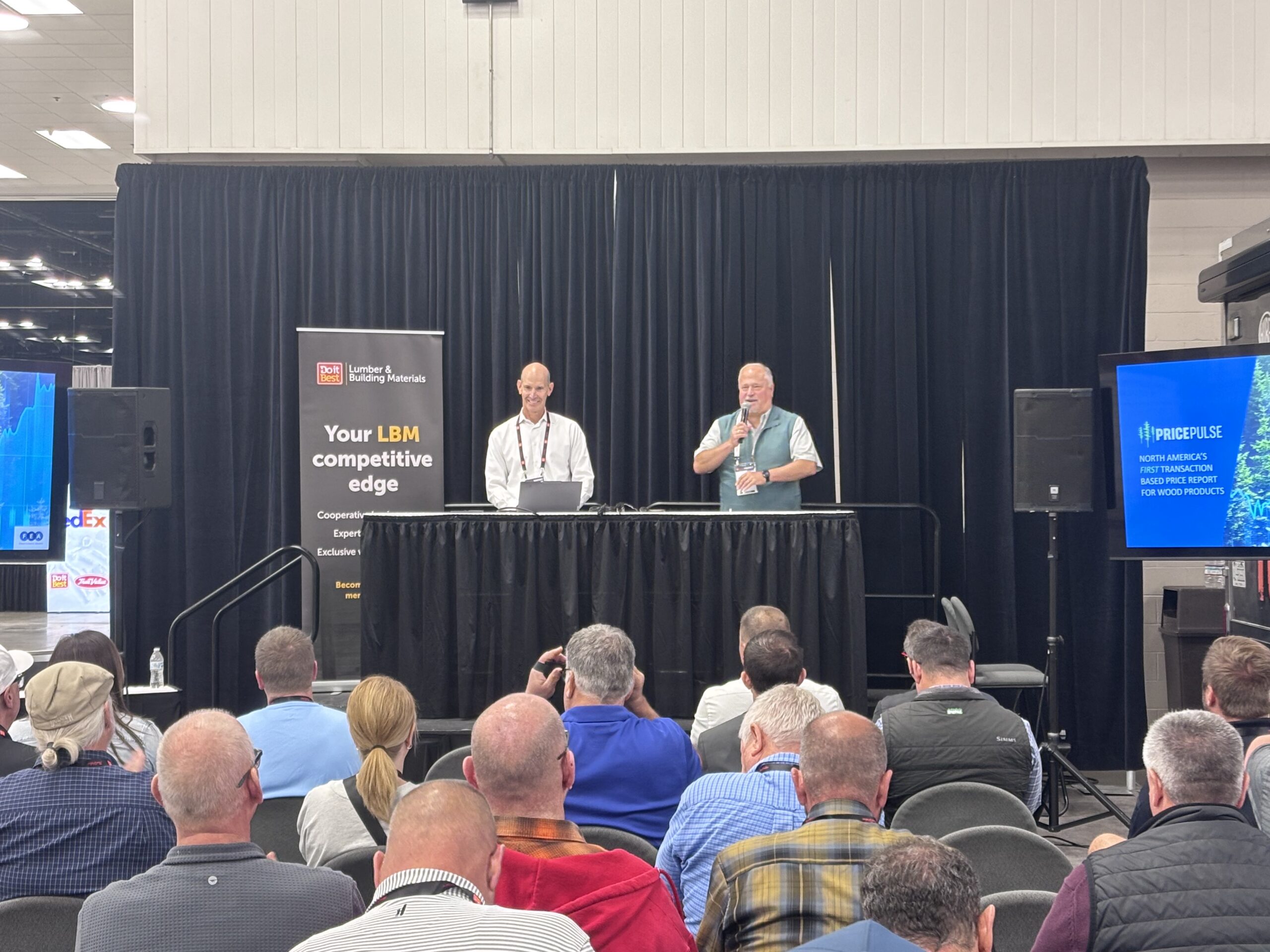
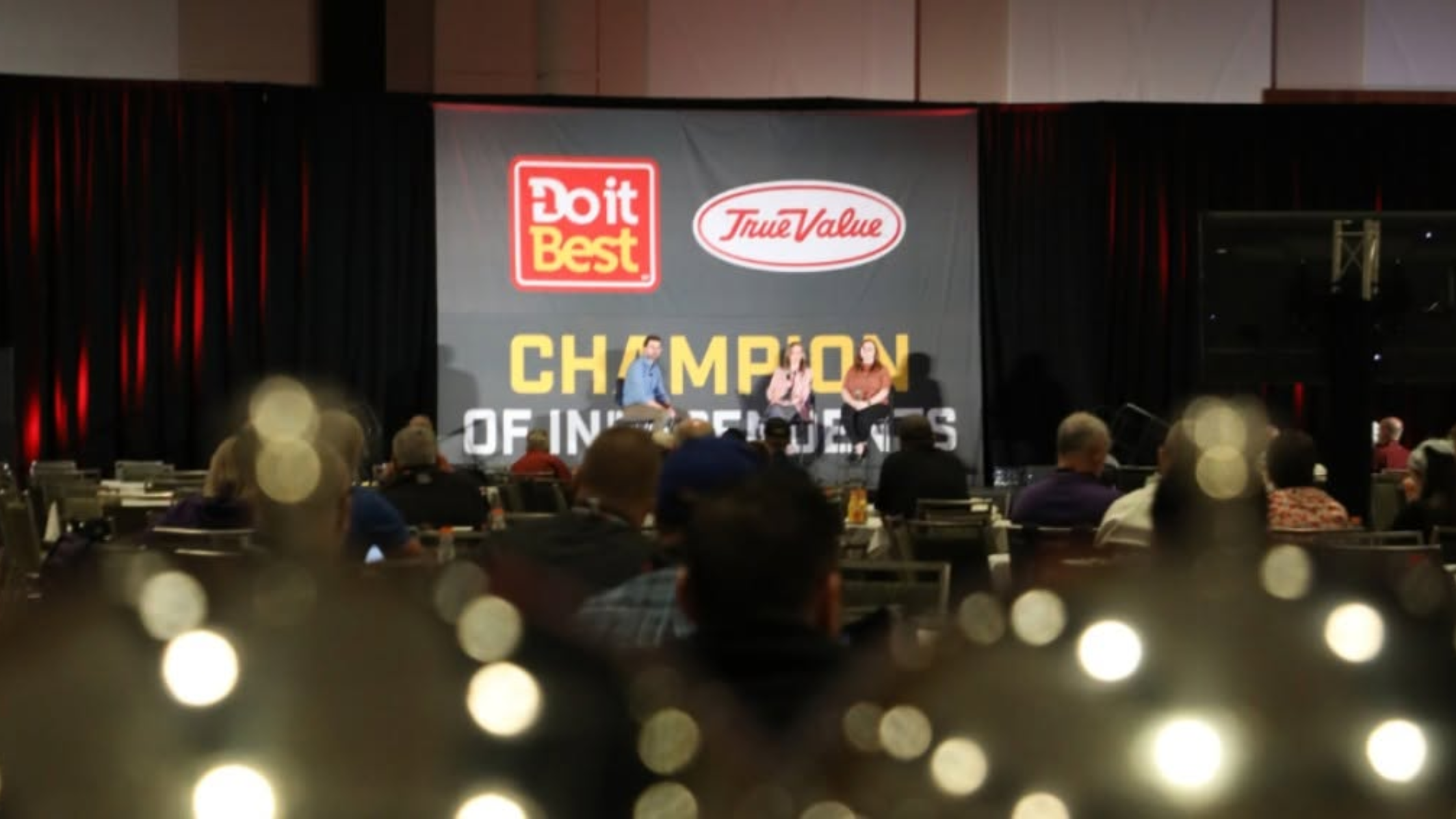
Chuck is Senior Vice President of Development at Service Partners. At Fall Market in Indianapolis, he sat down on the show floor with our brand and strategic partner Stefanie Couch for the Grit Blueprint Podcast, a Grit Blueprint and Do it Best collaboration. In just under half an hour, they got into what pros and DIY customers each need from your insulation aisle, why your local code should shape what you stock, and how a yard can sell gutters without ever hiring an install crew.
If you’re a Do it Best or True Value member, there’s also a reason to act this month. Code Pink Hat takes 5% off one Service Partners order placed by October 31, 2026. How to use it is at the bottom of this post.
This episode is sponsored by Service Partners.
Pros and DIYers want different things from the insulation aisle
For a contractor, Chuck kept it short: time is money. A pro needs job lot quantities, whether you stock them or can get them quickly. Their jobs tend to run bigger, some call for more commercial product (a metal stud building instead of wood, for example), and plenty of them want it delivered to the site.
The DIY customer wants something they can install without a lot of measuring and guessing. Chuck’s example will sound familiar to some yards. Many dealers still carry fiberglass rolls because they always have, but he said most of what sells today is batts. They come precut, so a homeowner isn’t measuring twice and hoping the cut lands right.
He also sees a big market in blow-in for attic top-offs, and he pushed back on the idea that insulation is a northern product. When it’s 118 degrees in Arizona, insulation is what keeps the air conditioning inside the house.
Three questions for anyone new at the counter
Stefanie asked Chuck what a first-day counter hire should ask when a customer has no idea which insulation to buy. He had three:
- Is the project residential or commercial?
- Is it wood or steel construction?
- What matters more on this job: keeping heat in or out, cutting down on noise, or both?
Work through those and the options narrow quickly. Stefanie’s advice to anyone new on the counter was to write them down. If you’re building out training for newer counter staff, Pro Sales School and LBM Academy are both worth a look.
Where the products actually differ
Service Partners carries fiberglass, cellulose, mineral wool, rigid board, and foam. Chuck said all of them do the thermal job. The gap shows up in sound. Mineral wool and cellulose are both strong acoustical choices, which matters to the customer who can hear water running through the walls. Chuck admitted that one drives him a little crazy at home.
On R-value, he didn’t oversell anything. R30 is R30, whatever it’s made of. Cellulose may be a little greener than fiberglass, but an R30 of it won’t insulate any better.
Two cellulose products came up in the conversation:
- CleanFiber is made from recycled corrugated cardboard. The manufacturer describes it as low-dust, and Chuck said it doesn’t gunk up the blowing machine.
- Greenfiber Supreme Plus is treated with Zone Defense and Board Defense, insecticides registered with the EPA for use in cellulose insulation. According to the manufacturer, they help prevent insect damage to and infestation of the insulation.
One caution for the counter on Supreme Plus: that protection stays inside the insulation. The manufacturer is clear that it doesn’t extend beyond it and doesn’t replace a termiticide where one is required, so keep the conversation to what the label says.
A word on mineral wool supply
At recording in late September, Chuck said mineral wool was on allocation, and his guess was that it would stay that way for another four to six months. If you stock it and don’t have an order in, he’d place one. If you’re bidding a commercial job, where a lot of mineral wool ends up, be careful about the delivery date you promise.
Service Partners sells all three manufacturers Chuck named: ROCKWOOL, Thermafiber, and Johns Manville. He said that may give a dealer a better shot at finding product while supply is tight.
Let your local code shape the shelf
Near the end, Stefanie asked for the first thing a dealer should do to sell more insulation. Chuck’s answer had nothing to do with buying from Service Partners. Learn the building codes in your market. He said insulation requirements are among the things he sees changing fastest.
Then hold your shelf up against them. Can you blow in enough to meet the attic requirement your customers face? If R11 and R13 have always been your sellers because they’re inexpensive, is it time to carry R30, R38, or a high-density R21? That’s where Chuck would start if the goal is a more profitable insulation category. To see what’s available through the co-op, start with our insulation category.
Stefanie put it in terms every yard understands. Know the code, and you become the expert customers come back to.
When you don’t have the room
Insulation is bulky, and not every yard can spare the space. Chuck said Service Partners runs 80 distribution centers with 150 salespeople, and he thinks about them this way: “Our warehouses are our dealers’ warehouses.” You can will-call at a branch, take delivery at the yard, or have product sent straight to the job. Chuck said that lets a dealer buy what they need, turn inventory faster, and keep their own floor for other products.
He backed it up with two stories.
In Indianapolis, a dealer had a customer who needed product to finish a job. The regular Service Partners delivery wasn’t due until the next week, and the customer couldn’t wait that long. So the manager of the local Service Partners branch put the order in his own truck and drove it over. The customer finished the job and got paid. So did the dealer.
The second started with a dealer in Louisiana whose customer had work in Pennsylvania. The Louisiana salesperson could have handed the dealer to the Pennsylvania branch and moved on. He stayed with it instead, making sure the dealer knew who to call, where the product was headed, and when it would land, right up until it arrived on time.
Stefanie pointed out that handoffs are where a lot of service falls apart, usually because the customer ends up explaining everything twice. Chuck’s version: “I think it’s about owning the relationship with the dealer.” It’s worth thinking about the next time your counter passes a customer to the yard. If that’s where your yard loses time, it’s the kind of gap Scott Morrison works through with member yards in our Operational Excellence program.
Gutters, for the pros already in your store
Stefanie grew up around her dad’s lumberyard, and gutters were never on its radar. Listening to Chuck, she said it could have been a great complement to what they already sold.
The easiest way in is leaf protection: the guards that keep leaves and pine needles out so water keeps moving, and so northern gutters don’t clog and freeze. Chuck called it very profitable for dealers. Pros and remodelers can install it, and so can DIYers. Chuck has put it up himself, and by his own account, that’s a pretty low bar.
For yards in wildfire country, he pointed to E-Z Gutter Guard’s stainless mesh Leaf Destroyer and Leaf Eliminator. The manufacturer reports that both passed ASTM flame-spread tests and an ember-intrusion test based on ASTM E2886. A gutter full of dry needles sits right under the roof edge, so in the right market that’s a selling point customers will understand immediately.
The bigger opportunity may be a materials-only program. Look at who’s already in your store every day: remodelers, siding crews, window and door installers. Many of them could hang gutters but don’t own the equipment. Chuck said some dealers run continuous gutter, drop it at the jobsite with the downspouts and elbows, and let the contractor take it from there.
Siding is the natural fit. As Chuck put it, if a crew is putting up new siding, they’re probably putting up new gutters, too. He and Stefanie both called gutters a strong margin category, and Stefanie said she rarely sees them at the yards she visits.
Chuck said it isn’t a complicated business to get into. To run materials only, you need:
- A gutter machine that runs 5-inch and 6-inch gutters
- Gutter coil
- A trailer
Your Service Partners branch can supply the downspouts, elbows, and accessories. If you’re pricing out equipment, Service Partners’ gutter machine guide walks through machine profiles, sizes, and upkeep.
How to use code Pink Hat
Through October 31, 2026, Do it Best and True Value members can take 5% off one order from Service Partners with code Pink Hat. It’s limited to one order per member account, and Chuck said it applies to whatever material you’re ordering. He also admitted he has no idea where the name came from, but it’s hard to forget.
Orders go directly through Service Partners. Call your Service Partners rep, or use Find My Store on service-partners.com to reach your local branch. Give them the code when you place the order.